

Estimated reading time: 12 minutes
Key Takeaways
- The overall five-year relative survival rate for pancreatic cancer is 13%, varying dramatically by stage at diagnosis.
- Only 15% of cases are caught at the localized stage when survival rates reach 44%.
- Stage 4 pancreatic cancer has a 3% five-year survival rate, but modern treatments can extend median survival to 11-12 months.
- Individual factors like genetic markers, performance status, and access to specialized care significantly influence outcomes.
- Treatment goals shift from cure to quality of life and symptom management for advanced disease.
- Clinical trials and precision medicine offer hope for better outcomes beyond current statistics.
Table of contents
- Understanding Survival Rate Terminology
- Current Survival Statistics: A Detailed Overview
- Prognosis for Stage 4 Pancreatic Cancer
- Factors That Influence Life Expectancy
- Treatments That Impact Survival and Quality of Life
- Practical Support for Patients and Families
- Essential Questions for Your Care Team
- Research Advances and Patient Stories
- Frequently Asked Questions
- Conclusion and Recommended Next Steps
A diagnosis of pancreatic cancer inevitably leads to questions about survival rates. These numbers, while stark, are often the first piece of information families seek to grasp the road ahead. Understanding what these statistics mean, and what they don’t can help manage fear and inform critical decisions about care.
The emotional weight of this diagnosis is profound. Feelings of uncertainty and anxiety are not only common but expected. Before confronting the numbers, it is helpful to define three key terms you will encounter.
- Survival Rate: The percentage of people with a specific cancer who are alive after a set period, typically one, three, or five years, compared to the general population.
- Prognosis: The predicted course and outcome of the disease based on medical evidence.
- Median Survival: The length of time at which half of the patients in a given group are still alive.
This guide clarifies the most recent survival statistics from sources like the Surveillance, Epidemiology, and End Results (SEER) program and the American Cancer Society. More importantly, it explores the individual factors that shape outcomes and outlines practical pathways for care and support. The numbers provide a framework, but your personal journey is defined by much more.
Understanding Survival Rate Terminology
A pancreatic cancer survival rate expresses the percentage of people alive at specific intervals after diagnosis, most commonly one, three, and five years. These are typically relative survival rates, which compare survival among cancer patients to survival in the general population of the same age and sex.
Median survival is another crucial metric. It represents the midpoint in a set of survival times; half of patients live longer than this point, and half live less.
These figures are derived from large databases that aggregate outcomes from thousands of cases. Reputable sources include the National Cancer Institute’s SEER program, and the American Cancer Society. It is vital to remember that these are population-level averages. They cannot forecast the outcome for any single person.
Medical progress also means that current patients may have access to therapies that did not exist when this historical data was collected. New chemotherapy regimens, targeted drugs, and surgical techniques continually shift the landscape of potential outcomes.
Current Survival Statistics: A Detailed Overview
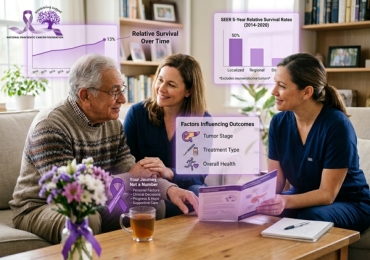
The most current data presents a complex picture. The overall five-year relative survival rate for pancreatic cancer is 13%. This figure represents meaningful progress from a decade ago but has plateaued in recent years.
In 2026, an estimated 67,530 people in the United States will be diagnosed with pancreatic cancer, and approximately 52,740 will die from the disease, solidifying its position as the third leading cause of cancer death.
The most significant determinant of survival is the stage at diagnosis. The disparity in outcomes based on how far the cancer has spread is dramatic.
| Stage at Diagnosis | Description | Approximate Percentage of Cases | 5-Year Relative Survival Rate |
|---|---|---|---|
| Localized | Cancer is confined to the pancreas. | 15% | 44% |
| Regional | Cancer has spread to nearby lymph nodes or tissues. | 28% | 17% |
| Distant (Stage 4) | Cancer has spread to distant organs. | 51% | 3% |
| All Stages Combined | 100% | 13% |
A critical challenge is that only about 15-17% of cases are found at the localized stage when treatment is most effective. Over half are diagnosed at stage 4. This reality underscores the importance of early detection research.
When reviewing these statistics, consider them a starting point for conversation with your oncologist, not a verdict. They are based on patients diagnosed and treated several years ago. Today’s treatments aim to produce better results, and many individuals live longer than these averages suggest.
Prognosis for Stage 4 Pancreatic Cancer
A stage 4 diagnosis means the cancer has metastasized to distant organs, such as the liver or lungs. At this stage, the disease is generally not considered curable. However, treatment is far from futile. The goal shifts to controlling the cancer’s growth, extending life, and managing symptoms to preserve quality of life.
Without treatment, median survival is typically measured in months. Modern chemotherapy regimens have extended that median to approximately 11 to 12 months. A subset of patients, particularly those who respond robustly to therapy or have tumors with actionable genetic features, live significantly longer.
Several key factors influence outcomes in stage 4 disease:
- Performance Status: A measure of a patient’s ability to perform ordinary daily activities. Those with a higher functional level generally tolerate treatment better and often see better outcomes.
- Treatment Response: How effectively the tumor shrinks or stabilizes in response to initial chemotherapy is a strong predictor.
- Genetic Markers: Tumors with specific mutations, such as in the BRCA genes or with microsatellite instability (MSI-high), may respond to targeted therapies or immunotherapy, altering the prognosis.
- Overall Health: The presence of other serious medical conditions can affect treatment options and tolerance.
Management of stage 4 pancreatic cancer involves a multidisciplinary approach. Standard chemotherapy options include FOLFIRINOX or gemcitabine with nab-paclitaxel. For eligible patients, PARP inhibitors or clinical trials offer additional avenues. Equally important is palliative care, which focuses on relieving symptoms like pain, nausea, and fatigue, and should be integrated early in the treatment plan. For guidance on when to transition to hospice-level care, see: when to start hospice care.
Factors That Influence Life Expectancy
“How long can I live?” is perhaps the most difficult and personal question. The answer is uniquely individual, shaped by a confluence of factors that extend far beyond a simple stage number.
Disease Characteristics: The stage at diagnosis remains the most powerful prognostic factor. The biology of the tumor itself also matters. Its grade (how abnormal cells look under a microscope) and specific genetic mutations influence its aggressiveness and treatment susceptibility.
Patient-Specific Factors: Age and overall health play substantial roles. Younger patients with fewer other health concerns often have more resilience to withstand intensive treatments. Nutritional status and the ability to maintain weight are also clinically significant.
Access to Specialized Care: Where treatment occurs can influence survival. High-volume pancreatic cancer centers, where teams perform complex surgeries regularly, often achieve better outcomes. A multidisciplinary team including surgical, medical, and radiation oncologists, as well as palliative care specialists and nutritionists, provides coordinated, comprehensive care. Find specialized cancer centers.
Treatment Modalities and Response: The ability to undergo surgery, the response to chemotherapy, and participation in clinical trials all directly affect life expectancy. Each treatment decision opens a different potential pathway.
Treatments That Impact Survival and Quality of Life
Pancreatic cancer treatment is tailored to the stage of disease and the patient’s health, with goals ranging from cure to long-term control and comfort.
Surgery: For the approximately 20% of patients with localized, resectable tumors, surgery offers the best chance for long-term survival. The Whipple procedure (pancreaticoduodenectomy) is the most common complex operation.
Chemotherapy: Modern multi-drug regimens have improved outcomes. FOLFIRINOX and gemcitabine with nab-paclitaxel are standard options that have demonstrably extended median survival compared to older therapies. For detailed information on chemotherapy options.
Precision Medicine: Genetic testing of tumor tissue can reveal targets for specific drugs. PARP inhibitors benefit patients with BRCA mutations, while immunotherapies can be effective for the small subset of tumors with MSI-high status.
Radiation and Interventional Procedures: Radiation therapy can help control local disease or alleviate pain. Procedures like biliary stenting relieve jaundice, and nerve blocks can manage severe abdominal pain.
Palliative Care: This specialized medical care focuses on relieving symptoms and stress. Evidence shows that integrating palliative care alongside standard cancer treatment can not only improve quality of life but may also extend survival.
Clinical Trials: Participation in research studies provides access to promising new therapies and contributes to the advancement of care for all patients. Explore clinical trials.
Practical Support for Patients and Families
Navigating pancreatic cancer is a multidimensional challenge. Addressing practical and emotional needs is as crucial as medical treatment.
Symptom Management: Effective control of pain, digestive issues (often requiring pancreatic enzyme replacements), and fatigue requires proactive communication with your care team. A registered dietitian specializing in oncology can provide invaluable nutritional guidance. For enzyme replacement guidance. For nutrition and meal planning support and meal planning.
Caregiver Support: Family caregivers provide essential support but face immense physical and emotional strain. Respite care, accepting help from others, and maintaining the caregiver’s own health are not luxuries but necessities. Caregiver support groups offer a space to share experiences and find solidarity. Tips for caregivers.
Planning Conversations: Discussing care goals, advance directives, and wishes early and openly, though difficult, ensures that a patient’s values guide medical decisions. Understanding the roles of palliative care (at any stage) and hospice care (when treatment is no longer aimed at cure) is an important part of this process.
For a curated list of support services and resources available through NPCF, including patient navigation help and support groups, visit: resources and finding help resources.
Essential Questions for Your Care Team
Preparing questions can help you make the most of appointments. Consider asking your medical team:
- Based on my specific test results and health, what is a realistic prognosis range?
- Is the goal of my treatment curative, or to control the disease and manage symptoms?
- What are the expected benefits and potential side effects of my recommended treatment plan?
- Does my tumor genetics testing suggest I am eligible for any targeted therapies or clinical trials?
- Would a second opinion from a high-volume pancreatic cancer center be valuable?
- How will we manage symptoms like pain, digestion problems, and fatigue?
- When should we consider integrating a palliative care specialist into my team?
- What support resources do you recommend for me and my family?
For a ready-made checklist and further guidance on questions to ask your oncologist. For information on diagnostic tests that inform prognosis and treatment selection.
Research Advances and Patient Stories
While progress against pancreatic cancer has been slow, meaningful advances are occurring. The five-year survival rate has improved from 7% to 13% over the past decade. Current research focuses on several promising fronts:
- Early Detection: Major clinical trials are exploring screening in high-risk groups, such as those with new-onset diabetes, to catch the disease at earlier, more treatable stages.
- Targeted Therapies: Drug inhibitors have created new options for patients with specific genetic profiles.
- Treatment Combinations: Researchers are continually testing novel drug pairings and sequences to improve effectiveness.
Patient stories reflect this evolving landscape. One patient with stage 4 disease shared, “My oncologist explained all my options. The chemotherapy was difficult, but it worked. With good symptom management, I’ve had quality time with my family, milestones I feared I’d miss. Every day is precious.” Such accounts highlight the gap between population statistics and individual experience, and the importance of hope and comprehensive care. For more inspiring accounts, see: survivor stories and patient success stories.
Frequently Asked Questions
What is the current pancreatic cancer survival rate?
The overall five-year relative survival rate is 13%. This varies drastically by stage: approximately 44% for localized disease, 17% for regional disease, and 3% for distant (stage 4) disease.
What is the prognosis for stage 4 pancreatic cancer?
The prognosis involves metastatic disease. With modern chemotherapy, median survival is about 11-12 months, though many live longer. Treatment focuses on controlling the cancer and managing symptoms to maintain quality of life.
Can treatment actually improve survival?
Yes. Treatment significantly improves outcomes compared to no treatment. Surgery can be curative for early-stage disease. Chemotherapy can double median survival for advanced cases. Targeted therapies and clinical trials offer further opportunities for life extension.
Where can I find support and information about clinical trials?
Organizations like the National Pancreatic Cancer Foundation (NPCF) offer patient navigation services, support groups, educational resources, and searchable clinical trial databases.
Conclusion and Recommended Next Steps
Survival statistics provide a necessary but incomplete snapshot. They are historical averages, not personal predictions. Your individual path will be shaped by your specific diagnosis, overall health, treatment choices, and access to support.
The medical landscape is not static. Research into earlier detection, better treatments, and personalized medicine continues to build momentum.
As you move forward, consider these steps:
- Seek Expert Guidance: Connect with a patient navigation service from an organization like NPCF. They can help you understand your diagnosis, explore treatment options, and find specialized care centers. Find resources.
- Build Your Support System: Engage with support groups for both patients and caregivers. You do not have to navigate this journey alone. Join support groups.
- Explore All Options: Discuss clinical trials with your oncologist. They may provide access to the next generation of therapies.
- Prioritize Quality of Life: Integrate palliative care early to manage symptoms and stress effectively. For end-of-life planning guidance, see: when to start hospice care.
- Consider a Second Opinion: Seeking another expert perspective can confirm your treatment plan or reveal additional options. For help finding top centers.
You are facing a profound challenge, but you are not without resources, community, or hope. A thoughtful, informed approach to care and support can make a substantial difference in the journey ahead.